Do clear aligners have a greater environmental impact than fixed appliances?
We should all be concerned about the impact of our daily activities on the environment. Recently, the environmental impact of some aspects of medical health care has been investigated. However, very few studies have examined this issue for orthodontic treatment.
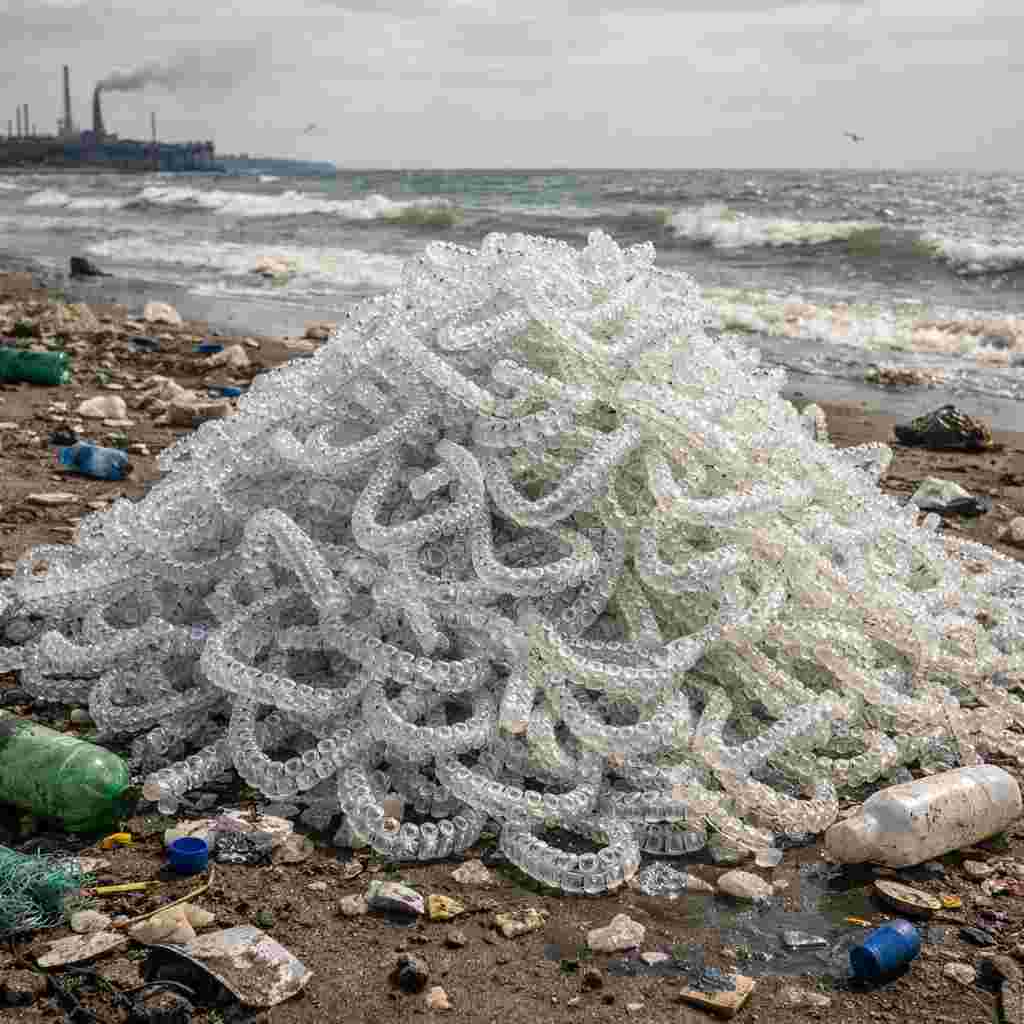
This interesting new paper provides us with initial information on the environmental impact of fixed appliances and aligners. This is particularly relevant because the increasing use of plastics and the release of greenhouse gases are of concern.
A team from Nijmegen, Holland, did the study, and the European Journal of Orthodontics published the paper.
Maria Johanna Jacoba Heezen et al
EJO advance access. https://doi.org/10.1093/ejo/cjag025
What did they ask?
The aim of this study was to
“Develop an estimate overview of the environmental impact of self-ligating metal brackets treatment compared with clear aligner treatment”
What did they do?
They carried out an analysis based on the treatment of four cases: two were non-extraction and two involved extractions. Each case was treated with either clear aligners or fixed appliances. The team obtained these cases from an experienced orthodontist in both fixed appliance and aligner care.
They obtained information on all environmental aspects of providing this treatment, and from this they constructed environmental indicators. These were
- Carbon footprint, expressed per kilogram of carbon dioxide equivalent.
- Cumulative Energy Demand. This measures the total energy consumption throughout the life cycle of a treatment.
- ReCiPe 2016. This is a widely used method for evaluating the environmental impact of processes.
The data they used were provided by the manufacturers of the fixed appliances (Damon) and the clear aligners (Spark). They then combined this with data from the individual treated cases. This included the amount of materials, the materials’ life cycle, the impact of transport, and, most importantly, the multiple stages of clear aligner treatment.
What did they find?
They produced a large volume of complex data. I do not have the space to cover all of this in this post. However, the key findings were;
- The carbon footprint for clear aligner treatment ranged from 20.6 to 24.7 kg of CO2, while fixed appliance treatment was 0.22 kg CO2.
- The CED was in favour of fixed appliance treatment and showed greater energy waste with aligner treatment.
- Fixed appliances created a lower environmental burden.
Their overall conclusions were:
“Within the limitations of a small sample size and simplified model, fixed appliance treatment showed a lower environmental impact than clear aligners.”
What did I think?
This was a very interesting yet complex paper to interpret. Importantly, the authors noted that the results are exploratory and that more research is certainly needed.
Nevertheless, the findings were logical. For example, there are many stages to aligner treatment. These include:
- multiple 3D printed models
- thermoforming
- trimming and polishing
- the individual plastic wrapping and
- international shipping
This is compounded by discarding the aligner after a week or two of wear. This process is repeated 30 to 40 times per patient. It was interesting to note that the author estimated that aligner therapy up to 2020 had already generated approximately 1,875 tonnes of plastic waste. This is certainly concerning.
In contrast, fixed appliances use comparatively small quantities of material and generate far less waste.
The authors made several suggestions to change this situation:
- The use of recyclable polymers
- Biodegradable materials
- Direct 3D printing aligners
- An improved disposal programme
Final thoughts?
This paper addresses a very serious question that is relevant to us all. While the authors have made several assumptions that may overestimate the impact of aligners, there is a degree of logic to their conclusions. This area requires considerably more detailed investigation. I hope to see this team and others continue working on this over the next few years. We need to become more environmentally aware.
Until then, perhaps we need to consider the environment and sustainability when prescribing different types of treatment. This may influence our and our patients’ treatment choices.

Emeritus Professor of Orthodontics, University of Manchester, UK.
What about recycling ?
From looking into this
All plastics are recyclable as long as they are seperated into type.
However, many aligners companies are rushing to multiple layers of different plastics making them unable to be recycle, whilst making some very dubious claims on the advantage of multiple layers
FYI need a minium of 3 tonnes of a seperated single waste plastic to make recycling viabale. So the aligner manufacturers will need to take the lead in recycling. I know of one who is – ‘Angel’ who has (a rather expensive) recycling offer
And what about all those VFM / essix retainers ???
Hi Ross – Check out our recycling program! https://maso.org/tiny-changes-recycling/. Aligners, 3D printed models, used toothbrushes etc can’t be recycled in municipal recycling, plus only a small percentage of plastics are actually recycled. Our program uses a company called Terracycle and they guarantee that 100% of all compliant material is recycled. Our boxes accept basically any new or used plastic dental materials. The program is open to any dental professional in the US and Canada. The first box is free and subsequent are $99 each and they hold ~1000 aligners. Angel Aligner is one of our biggest sponsors. Yes, other aligner companies should step up and sponsor us as well! I don’t believe it’s possible to fabricate aligners out of the recycled plastic, but certainly turning it into playgrounds, benches etc is far better than having it end up in a landfill. Thank you, Kevin, for this blog post and for drawing attention to this important issue!
Hi Mandy
Many thanks
I know of Angel and the tetra cycle program, in UK they charge £140 for the box
I happen to have a good friend who’s long standing family business is recycling plastics and its not a simple as it seems ; the plastic types need seperated (not only colour from clear) to enable full recycling and reuse of the ploymer (other than for benches playgrounds etc). Polymer plastics are like metals – indefinityly reusable, as long as they are kept seperate in the process.
IMHO the BIG problem is regulators and manufactuers demanding ‘virgin’ plastics ; so it makes reusing ploymer plastics, like metal, is never going to happen without a change in mind set
PS as plastics indefinitely recyclable (like metal) why do manufacturers and regulators insist on ‘virgin’ plastic and not use recycled plastic?
Kevin,
I’m not being dismissive of this study, and everyone needs to be sensitive about the environmental impact of plastic use, but the orthodontic industry is the least of our concerns in the United States. The following is from the federal government and industry analysts in the United States. Note this is just for shipping:
“The annual use of plastic for clear aligner orthodontics in the USA is a tiny fraction—less than 0.1%—of the plastic used for shipping. Clear aligner therapy accounts for roughly 150 to 300 tons of medical-grade plastic annually, whereas USA shipping and packaging consumes millions of tons of polyethylene-based plastics.
Plastic for Clear Aligner Orthodontics
• Annual Volume: Industry analysts and environmental studies estimate that the U.S. clear aligner market generates up to 300 tons of medical-grade thermoplastic waste per year
Plastic for Shipping
• Annual Volume: The U.S. Environmental Protection Agency (EPA) reports that plastic containers and packaging generated for the United States exceed 14.5 million tons annually. U.S. Plastics Pact data attributes over 5.8 million metric tons of this solely to polyethylene and packaging formats placed on the market by major U.S. organizations.”
Interesting comments. We are using Terra Cycle to try and do our part. Definitely worth considering all the other impacts mentioned as well.
This discussion leads us back to the primary question: why are we so eager to treat our patients with an appliance which can hardly provide the same standard of treatment results as can “traditional” orthodontic appliances?
I once read the article that between 325 million and 360 million tennis balls are manufactured worldwide each year!
360 million tennis balls!!! Do you think there is a recycling process for tennis balls?
Let that sink in…
And maybe also other factor that was not included – how many visits can be saved using pre-planned appliance vs one made on the go which requires more often visits? Each visit usually means a car travel – that is fuel, breaks usage, tires usage etc.
Nevertheless, while I’m fully align with the care for environment, let’s be serious here, as I feel this is not about the Planet but rather “another argument that aligner treatment is pure evil”…
Apologize for a sarcastic tone but I really need to say it at loud.
Let’s keep discussion running and ask difficult questions but trying to put personal hesitations and assumptions aside.