How effective is molar distalisation with aligners?
Over the past year, we have reviewed several papers measuring the effectiveness of clear aligners. Most of these have concluded that there is a discrepancy between predicted and actual tooth movement. This new paper is by an established USA-based team and explores the effects of Invisalign on distal movement of maxillary molars.
The American Journal of Orthodontics published the paper.
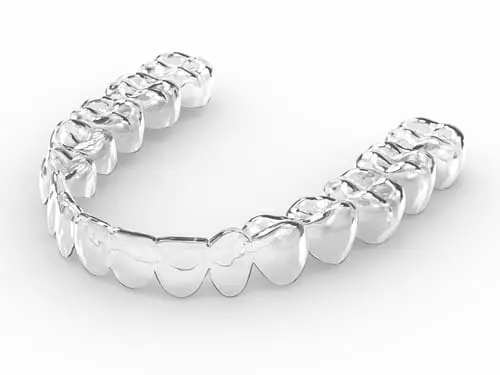
Assessment of sequential distalization with aligners using cone-beam computed tomography merged with intraoral scans.
Sanghee Lee et al
AJO-DO advance access https://doi.org/10.1016/j.ajodo.2026.08.016
What did they ask?
“The purpose of this study was to quantify the 3D movement of maxillary first molars during Invisalign sequential distalization combined with Class II elastics.”
What did they do?
A team of researchers carried out a retrospective investigation. They analysed records of 30 consecutive non-growing patients who completed Invisalign treatment at private orthodontic practices in Japan and Canada.
The inclusion criteria were a half-cusp Class II molar relationship. Importantly, correction of the Class II molar relationship was an inclusion criterion.
They collected data from high-quality pre-treatment and post-treatment CBCT scans with moderate (maxilla and mandible) or larger (entire head) fields of view.
A sample size calculation suggested 30 patients were required.
- They recorded the prescribed amount of tooth movement from the initial ClinCheck.
- Pre- and post-treatment intraoral scans were imported into the software. The software permitted superimposing the models for a three-dimensional analysis. This allowed the measurement of the actual linear and angular tooth movements in three dimensions.
- Finally, the they compared the changes from the fused CBCT/scan models with the planned movements from the initially approved ClinCheck tooth movements.
This was a sophisticated method of recording tooth movement and provides more data than simply measuring the scans of the teeth.
What did they find?
The team presented data on 30 patients (24 females and 6 males) on a total of 44 molars. The mean starting age was 28 years 7 months.
The maxillary first molar was distalised 1.7 mm at the mesiobuccal cusp but only 0.35 mm at the mesiobuccal root apex. The crown distalisation achieved only 69.7% of the planned movement, while the distal movement at the mesiobuccal root apex represented 26% of the planned movement.
During correction of the Class II molar relationship, there was significant distal crown tipping (7.14°) and rotation (8.22°). The actual distal tipping significantly exceeded the programmed value.
Their overall conclusions were
” Sequential distalization with clear aligners appears to correct Class II molar relationships. The clinician distalized the mesiobuccal cusp of the maxillary first molar by less than 2 mm on average. Distal crown tipping and mesial rotations achieve the correction. There were significant discrepancies between the planned and achieved tooth movements”.
What did I think?
This study provides further evidence on the effect of clear aligners, showing results similar to other studies in terms of achieved and predicted tooth movement. Notably, most of this movement was not attributable to bodily movement but rather to tipping and derotation. However, this may have been sufficient to correct the crowns to Class I.
These findings are not surprising given the limited control with aligners compared to fixed appliances, although this study did not include a fixed appliance control group.
I think we are now at the point where research shows that aligners mostly tip teeth. I understand that many will not widely accept this, yet I have not found evidence to the contrary.
When we look at the research methods. The team restricted the sample to completed cases. As a result, the results do not apply to all initiated cases. Additionally, the study was retrospective and therefore subject to considerable selection bias. We should consider these factors when interpreting the results.
Finally, the authors did not include any movement of the mandibular dentition that may have contributed to the Class II correction.
I also have a concern about routinely taking CBCT radiographs at the conclusion of treatment. This practice is not permitted in the UK, as these records do not provide any additional benefit to the patient. This is a controversial issue and should be considered by journal editors when accepting publications.
Let’s have a good discussion about this paper….

Emeritus Professor of Orthodontics, University of Manchester, UK.
Excellent write-up. If a Class 2 case were treated with clear aligners, would it make sense to treat again with traditional braces in order to ensure better longterm stability?
Another study that confirms plastik aligners only tip teeth.
Can we agree this is a “fact” ?
Of course we also know that tipped teeth are unstable and have a high predictable relapse factor.
You may have your own opinions but not your own facts, comes to mind.
More Lipstick on the Pig?
Which way the distalization was accomplished? Class 2 elastics or elastics with infrazygomatic screws? Big vertical attachments in order to obtain a clockwise moment were used?