MARPE and the Airway: Has the Appliance Become the Diagnosis?
This is a guest post by Bjorn Ludwig, who is known to many readers of this blog. He nicely discusses his viewpoint on the use of MARPE in airway orthodontics.
I came across this post on the excellent yONE platform that Bjorn has set up. yONE is a closed learning community built around short, regular teaching impulses. Björn sees the whole programme as a new way to organise continuing education: small, frequent opportunities to learn, connected to a community of colleagues.
His posts are easy to read and highlight main issues with limited additional text. They are clear and to the point. I thought I should post this example, as it clearly addresses the complex situation of MARPE and the airway.
Introduction
The updated American Association of Orthodontists white paper on sleep-disordered breathing, recently published in the *American Journal of Orthodontics and Dentofacial Orthopedics*, is unusually clear.
Martyn Cobourne has already provided an excellent summary of this paper onthis blog. I do not want to repeat it. Instead, I would like to discuss whatis happening outside the scientific literature—in our clinics, inboxes andsocial media feeds.
We now receive enquiries almost every week from adults asking specifically for MARPE to improve their airway.
Importantly, they are not asking whether they have a transverse maxillary deficiency.
They are asking for the appliance.
What does the white paper tell us?
The main conclusions are pragmatic:
- Sleep-disordered breathing is a medical disorder.
- Medical diagnosis should precede an intervention intended to treat it.
- The orthodontist’s primary roles are screening, risk recognition, referral and interdisciplinary collaboration.
- No orthodontic intervention has been shown to prevent the development of sleep-disordered breathing.
- Orthodontic treatment is not supported as a stand-alone treatment for sleep-disordered breathing.
- No currently known craniofacial phenotype can reliably identify its presence.
- Cephalometric or CBCT airway dimensions are unsuitable for diagnosis, risk assessment or evaluation of treatment success.
- Routine frenectomy is not supported for the prevention or treatment of sleep-disordered breathing.
- Current evidence does not demonstrate that orthodontic extractions or distalisation cause sleep-disordered breathing.
This does not mean orthodontists have no role. It means that our role must begin with diagnosis—not with an appliance.
From expansion to human optimisation

The scientific message is cautious. The online message is rather different.
MARPE and other “airway” treatments are associated online with an expanding list of benefits:
- improved nasal breathing;
- elimination of mouth breathing;
- reduced snoring;
- deeper and more restorative sleep;
- improved daytime energy;
- reduced fatigue and brain fog;
- better concentration and memory;
- improvement of ADHD-like symptoms;
- improved academic performance;
- fewer headaches and migraines;
- improvement of posture and temporomandibular symptoms;
- better athletic performance;
- broader smiles, stronger cheekbones and a more attractive face.
Not every clinician makes all these claims, and some are carefully qualified. Nevertheless, the combined social-media narrative is powerful: widen the maxilla, enlarge the airway and improve the person. At the more extreme end of the wider “airway wellness” ecosystem, better breathing becomes connected with hormonal health, immunity, digestion,fertility, sexual performance and even intelligence.
At this point, an orthodontic appliance is no longer being marketed as an orthodontic appliance. It has become a form of human optimisation.The difficulty is that these claims often combine several individually plausible steps into one apparently certain conclusion:
- Expansion changes anatomy.
- Anatomy influences breathing.
- Breathing influences sleep and general health.
- Therefore, expansion must improve sleep and general health.
Each step may sound reasonable. The complete causal chain, however, has not been demonstrated.
The treatment has already been selected
A recent enquiry from a 34-year-old patient illustrates the problem.
Before requesting an examination, the patient had already decided that:
- the maxilla required skeletal expansion;
- MARPE was the preferred treatment;
- mini-implants under local anaesthesia were acceptable;
- surgically assisted expansion was not;
- and improvement in breathing was an expected outcome.
The patient then asked four intelligent questions:
1. How many adults over 30 have you treated this way?
2. In how many did the midpalatal suture open without surgery?
3. Should I send a CBCT before the consultation?
4. What happens if the suture does not open?
These are reasonable questions.
But the most important question was missing:
“Do I have a transverse maxillary deficiency that requires treatment”?
The procedure had been selected before the diagnosis. The expected health benefit had been accepted before the evidence had been discussed. The appliance had become the diagnosis.
What can MARPE achieve?
MARPE is an important and valuable orthodontic technique. In a carefully selected adult with a genuine transverse skeletal discrepancy, it may produce clinically useful skeletal expansion and reduce unwanted dental effects compared with purely tooth-borne expansion.
However, nonsurgical suture opening cannot be guaranteed. Chronological age is only one of several relevant factors, and treatment may fail or produce an unfavourable response. Patients must understand the uncertainty and the possible need for an alternative or surgically assisted approach.
Expansion should therefore be prescribed because the patient has a diagnosed transverse problem—not because an airway rendering looks narrow or because the patient hopes to sleep, think or perform better.
The white paper makes another important distinction: an increase in nasal oropharyngeal volume does not automatically demonstrate improved respiratory function.
A colourful before-and-after CBCT image may be impressive.
It is not a sleep study.
It does not diagnose obstructive sleep apnoea, quantify its severity or prove that it has been successfully treated.
The paper also states that the additional effect of skeletal anchorage during expansion on breathing has not yet been objectively assessed. This is particularly relevant to the claims surrounding MARPE.
More skeletal expansion does not automatically mean more functional improvement.
This is not the patient’s fault
I do not blame patients for arriving with these expectations. They are responding logically to the information presented to them. If clinicians, influencers, podcasts and animated airway images repeatedly connect a narrow maxilla with poor sleep, reduced concentration, impaired development and long-term systemic disease, patients will understandably search for the appliance that promises to correct everything. They may even interpret a clinician who recommends proper diagnostics—or questions the indication—as being old-fashioned or insufficiently “airway aware”.
Our responsibility is to slow the process down.
Before discussing an expander, we should ask:
1. Is there a genuine transverse orthodontic discrepancy?
2. Is sleep-disordered breathing suspected or medically diagnosed?
3. What precise outcome are we attempting to achieve?
If a transverse discrepancy exists, we can discuss expansion on its orthodontic merits. If sleep-disordered breathing is suspected, the patient requires appropriate medical assessment and, when indicated, objective sleep testing.
Both problems may coexist.
But one does not diagnose the other.
What do I think?
The current enthusiasm for airway health contains something positive. Orthodontists are looking beyond tooth alignment, asking broader questions and collaborating more closely with medical colleagues.
But good intentions do not replace evidence. MARPE does not become an airway treatment simply because airway volume increases. It does not become preventive medicine because an attractive biological explanation can be constructed around it. And it does not become risk-free because surgery has been excluded from the patient’s preferred treatment menu.
We should
- treat genuine transverse discrepancies.
- screen for sleep-disordered breathing.
- refer and collaborate when appropriate.
But we should not manufacture an airway diagnosis to justify an appliance—or promise systemic health benefits that have not been demonstrated.
MARPE is an appliance.
It is not a diagnosis.
Airway is not a treatment menu.
*Björn Ludwig is an orthodontist in Traben-Trarbach, Germany
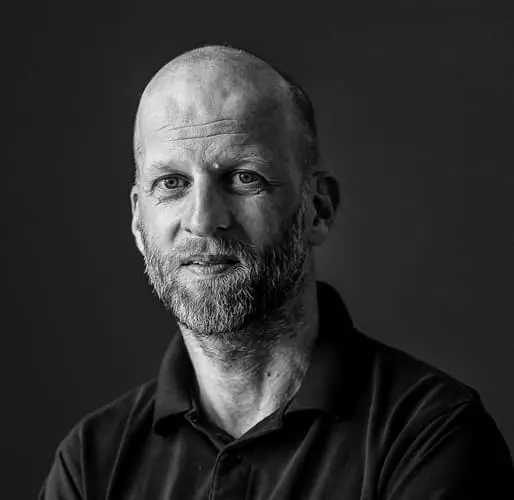
Björn Ludwig is a orthodontics specialist who runs his private practice in a small village in Germany. He also holds academic positions at two institutions: the University of Homburg/Saar in Germany and the Department of Orthodontics at the Institute of Odontology, Sahlgrenska Academy, University of Gothenburg in Sweden.
Very realistic from Bjorn as well as succinctly outlined.
Merely expanding the maxilla will not be enough to improve breathing; the tongue’s position is also important—specifically, resting against the hard palate. It is worth noting that one of the causes of a constricted maxilla is a tongue that spends too much time on the floor of the mouth.
Post of the year!
Could you please provide some evidence for the importance of the tongue position? Thanks in advance
For those who have not fallen to the seduction of “confirmation bias”, this is an impressive contribution. With compliments.
I agree – this post by Dr Ludwig is excellent
Thank you very much Bjorn for this very clear explanatation. I hope that everyone in the field of medicine and dentistry/orthodontics/orthognatic surgery reads and understands your contribution.
I agree – an excellent summary. MARPE is a one dimensional mechanical treatment for a complex biological condition. Airway issues are multifactorial and require an interdisciplinary approach in order to assess and diagnose before reaching a viable treatment plan. See the website of the Society for Dentofacial Growth & Function, http://www.connectingheads.com.
I agree – an excellent summary. MARPE is a one dimensional mechanical treatment for a complex biological condition. Airway issues are multifactorial and require an interdisciplinary approach in order to assess and diagnose before reaching a viable treatment plan. See the website of the Society for Dentofacial Growth & Function, http://www.connectingheads.com.
I fully agree with Kevin O’Brian’s article, and I believe that many, many of the points he raises are absolutely correct.
However, there are two points with which I definitely cannot agree.
First, the term “MARPE” (miniscrew-assisted rapid palatal expansion) is used throughout the article. This terminology originally refers to an approach in which rapid expansion is performed using a miniscrew-anchored appliance, analogous to the rapid expansion protocols used with dentally anchored appliances, where rapid activation of the expander is required. Once miniscrew anchorage is used, however, this concept of “rapid” expansion is no longer applicable in the same way.
On countless occasions, I have emphasized that this terminology no longer reflects the current state of our treatment protocols. Particularly in adults, the maxilla is not—and should not routinely be—expanded rapidly, but rather gradually and in a controlled manner. Rapid expansion in the adult patient would generally only be indicated when combined with an appropriate surgical intervention. This is also clearly reflected in the FC/PC activation protocol.
It is simply remarkable how an incorrect statement can become firmly established as accepted terminology. If the term is used incorrectly by laypeople or non-specialists, there is perhaps little that can be done about it. However, when we use this terminology in highly specialized and professional scientific publications, it is fundamentally incorrect.
MASPE or MAPE (miniscrew-assisted palatal expansion) would be the appropriate terminology. It conveys essentially the same concept while deliberately omitting the word “rapid.”
The second point concerns the improvement of nasal breathing. As orthodontists, we cannot definitively claim that orthodontic treatment produces structural changes in the hypopharynx or oropharynx. Björn has demonstrated this particularly impressively using lateral cephalometric radiographs, showing how a completely different apparent airway volume can be obtained within a matter of seconds simply as a result of changes in respiratory mechanics.
Where we can clearly and predictably achieve a structural change through properly performed maxillary expansion is specifically in the inferior portion of the nasal cavity. When increased nasal airway resistance is present prior to treatment, expansion can result in a substantial subjective and objective improvement in nasal breathing.
This aspect should definitely be mentioned.
There is virtually no other medical specialty capable of producing such profound skeletal changes in the craniofacial complex as orthodontics. For precisely this reason, I also consider improperly performed maxillary expansion in adults to be potentially harmful. Surgical expansion does not and cannot produce the same overall result in every respect. Similarly, an ENT specialist can reduce the size of the inferior turbinates, but this may be associated with additional adverse effects, including excessive dryness and crusting.
Predictability is particularly significant in patients who already experience symptoms associated with impaired nasal breathing. However, if a patient has not experienced any nasal breathing problems beforehand, they are unlikely to perceive a substantial subjective improvement.
In my clinical experience, patients begin to notice a subjective improvement once the transverse expansion reaches approximately 3 mm. We are referring here specifically to adult patients.
What is important to consider, however, is whether there are other contributing factors beyond a reduced width of the nasal cavity. Many patients primarily report nocturnal nasal obstruction or increased nasal airway resistance, and in these cases, the entire sleeping environment should be considered as a potential source of allergic triggers. These may include dust mite allergens, down feathers, sensitivity to laundry detergents, poorly ventilated bedrooms, mold spores, and other environmental factors. During the night, we are exposed to this environment continuously and in close proximity.
I was quite astonished the first time I vacuumed my bedsheet and saw the amount of particulate matter that had accumulated in the vacuum cleaner. I think everyone should try this experiment at least once!
What is striking is that these patients often report a reduction in their symptoms during the daytime. In such cases, transverse expansion alone will not address the underlying cause and may therefore provide little or no benefit.
As an impressive example among the many patients whose outcomes have been documented, I have attached Elisabeth’s video. I simply asked her what the treatment had changed for her.
I had expected that, above all, the improvement in her facial appearance would have been the most obvious source of positive feedback. Yet already in her second sentence, she speaks exclusively about the improvement in her quality of life, particularly the improvement in her nighttime breathing.
If that is not a success attributable to orthodontic treatment, then what is?
I strongly believe that we, as clinicians, should determine which treatment is appropriate and evidence-based, rather than leaving this decision to the patient. At the same time, I firmly believe that we should be proud of our ability to provide treatments with such profound functional and structural consequences.
This has long since moved beyond mere tooth movement.
Excellent article! Now if only the Instagram crew would stop promoting nonsense.
Agree, Kevin. Diagnosis before the appliance is the right order, and a bigger airway on a scan is not a sleep study.
At Infera we look at the “why” behind the breathing problem. A structured oral exam plus intake questions are assessed against established clinical classifications for OSA risk and oral restrictions. The AI organizes and synthesizes the evidence so the clinician can decide on further testing or treatment.
What do you think orthodontists should check routinely before an expander?
Fabulous Post! I really appreciate the thoughtful orthodontic evaluation and approach to sleep disordered breathing. The key was the comment about the transverse discrepancy. So many providers go right to the appliance rather than check the data first!
Great Blog Professor O’Brien.
Kind regards,
Jim
James Patrick Murphy DMD
Diplomate, American Board of Pediatric Dentistry